1. The Mechanical Reality of Transit Vibration
Road vibration during 800-kilometer transfers is the silent killer of electronic shifting calibration, hydraulic seals, and headset bearing preloads. Standard commercial van setups allow lateral frame flex when turning hairpins in the Pyrenees or navigating cobbles on non-race transit days.
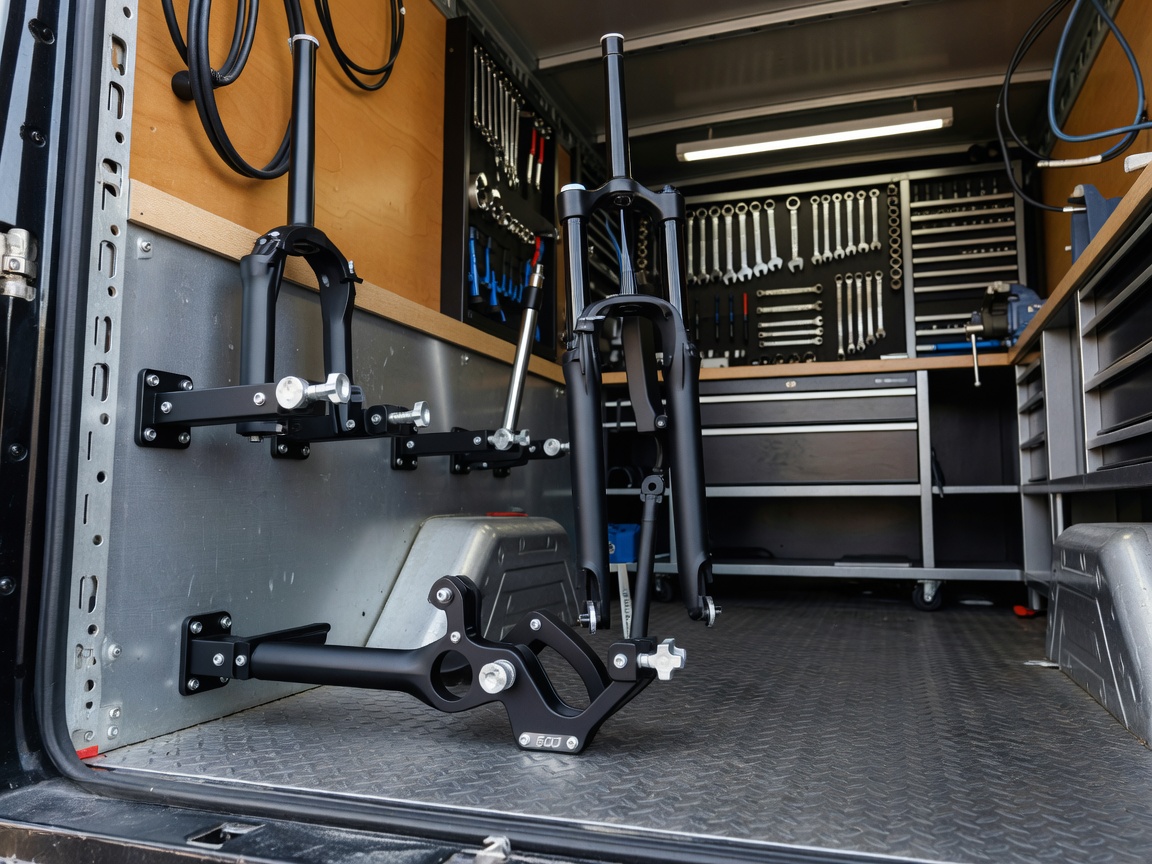
Our logistics framework mandates custom-machined thru-axle capture blocks mounted to extruded aluminum extrusion rails. By securing bikes exclusively by the front fork dropouts and rear chainstays—while isolating the carbon rims—we eliminate localized frame pressure and clamp-induced fatigue on featherweight top tubes.
2. Specialized Fleet Configurations: Vans vs. Heavy Rigid Trucks
Selecting the correct vehicle configuration depends on stage relocation frequency, hotel access road widths, and regulatory driver hours.
| Transport Asset | Capacity | Maneuverability | Best Strategic Application |
|---|---|---|---|
| High-Roof Long Wheelbase Van (3.5T) | 12-16 Road Bikes + Spares | High (Suburban & Historic Hotel Access) | Spring Classics, single-day events, recon teams |
| Custom Rigid Workshop Truck (18T) | 30+ Road & TT Bikes + Complete Wash Bay | Moderate (Requires planned heavy access routes) | Grand Tours, 7-day stage stage camps, full squad service |
| Custom Trailer Haulers | 20 Bicycles in climate-sealed pods | Low (Parking constraints in city centers) | Auxiliary junior/development squads and reserve fleets |
3. Protecting Integrated Cockpits and Time Trial Extensions
Modern one-piece aerodynamic cockpits and customized 3D-printed time trial extensions cannot simply be twisted or loosened for tight packing without compromising hydro-brake lines and electronic wiring looms. We design transport modules featuring staggered vertical staging. By offsetting handlebar heights across adjacent mounts, full handlebars and extended aero bars sit undisturbed, retaining torque settings directly tested in wind tunnels.
4. Environmental Control & Battery Safety
Extreme temperatures inside an uninsulated trailer baking in the July sun can degrade tubular rim glue, cause tubeless sealant to dry prematurely, and push lithium di2/eTap flight batteries past optimal storage temperatures. Our specialized truck bodies incorporate forced-air ventilation, insulated polyurethane paneling, and active temperature monitoring sensors with cab alerts.
Chain-of-Custody Checklist for Transfers
Prior to every inter-hotel transit, our chief mechanic and logistics coordinator sign off on:
- Electronic shifting sleep modes verified to prevent phantom battery depletion.
- Rider telemetry numbers mapped to individual roof-rack positions.
- Hydraulic pad spacers inserted in any wheel-off transit assemblies.
- Digital lockbox encryption codes updated for the rear ramp access.
5. Emergency Contingency During Transit Accidents
Vehicle breakdowns happen. In our playbook, every transport vehicle is twinned with secondary vehicle capacity. If a primary service van encounters transmission failure on the French autoroute, pre-mapped regional sprint vans are dispatched with auxiliary clamping rails to transfer the team's race fleet within 90 minutes.