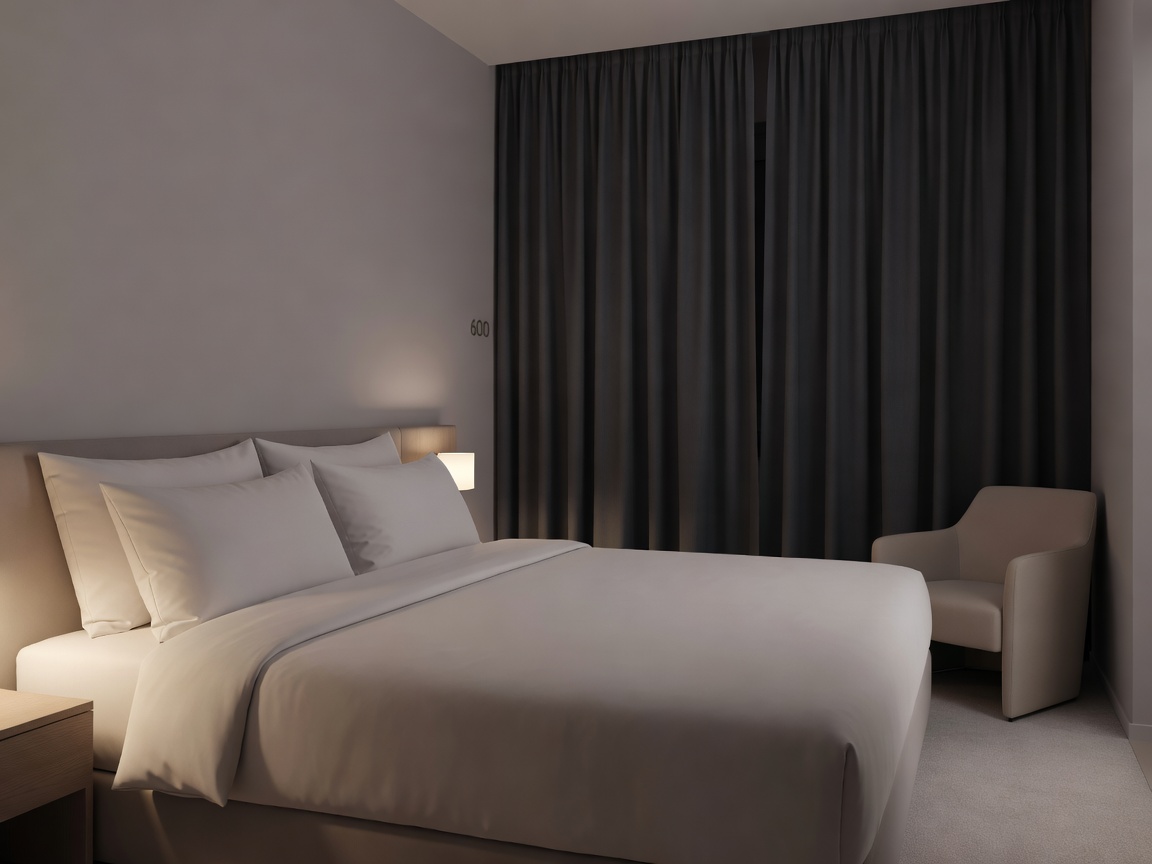
1. The Four Non-Negotiable Hotel Auditing Criteria
Organizers frequently allocate hotels based on geographic proximity rather than athlete sleep performance. Our team executes advance scouting or pre-arrival verification based on four strict parameters:
- Acoustic Isolation: We reject roadside rooms overlooking transit arterials. Rider rooms must be allocated on rear or upper corridors away from elevators, ice machines, and delivery docks.
- Thermal Control: Independent, controllable air conditioning is mandatory. An overheated room increases resting heart rates and devastates deep restorative sleep stages.
- Parking Footprint & Shore Power: The hotel must provide dedicated, secure flat parking for a 12-meter team bus, an 18-tonne mechanic truck, and four support vehicles. A 32-amp or 63-amp three-phase shore power connection prevents loud, fuel-burning generator run times overnight.
- Sanitary Protocols: Air filters are deployed in rider rooms, and bedding is verified hypoallergenic to prevent upper-respiratory tract infections during high-stress blocks.
2. Kitchen Operations & The Traveling Chef Truck
Relying on standard hotel catering is a recipe for nutritional deficits or gastrointestinal illness. Top-tier logistics plans provide either a specialized mobile kitchen truck or a contractual agreement allowing our private chef full commandeering of the hotel's prep stations two hours prior to standard dinner service.
We coordinate dry storage transfer boxes, sous-vide vacuum seals, and bulk filtered water supplies so that caloric targets—often reaching 6,000 to 8,000 kilocalories per rider daily—are reached cleanly without trace allergen exposure.
| Logistics Element | Standard Hotel Reality | Swaylo Optimized Standard |
|---|---|---|
| Room Climate | Central heat, inoperable windows | Verified A/C < 19°C target, Hepa filtration |
| Massage Rooms | Converted guest bathrooms | Dedicated dual-suite soigneur treatment zone |
| Electrical Hookup | Standard 230V household outlet | Three-phase industrial shore feed for workshop truck |
| Check-in Speed | Individual counter wait times | Advance key distribution before bus arrival |
3. Soigneur Massage and Treatment Staging
Within 20 minutes of pulling into the hotel, soigneur rooms must be fully functional. Our logistics packing system organizes massage tables, pneumatic compression boots, lymphatic drainage apparatus, and sterile laundry hampers into self-contained roll-in trunks. When athletes step off the bus, their treatment order is already posted on the digital dashboard.
4. Hotel Relocation Speed & "Strike" Protocols
On a Grand Tour with up to 18 hotel changes in 21 days, morning pack-down must run without friction. Riders leave packed personal luggage bags outside their door by 08:00 sharp. Luggage marshals load support vans while riders eat breakfast, ensuring all belongings reach the subsequent destination before the team bus rolls into the race paddock.