1. Deconstructing the Race Road Book for Non-Race Vehicles
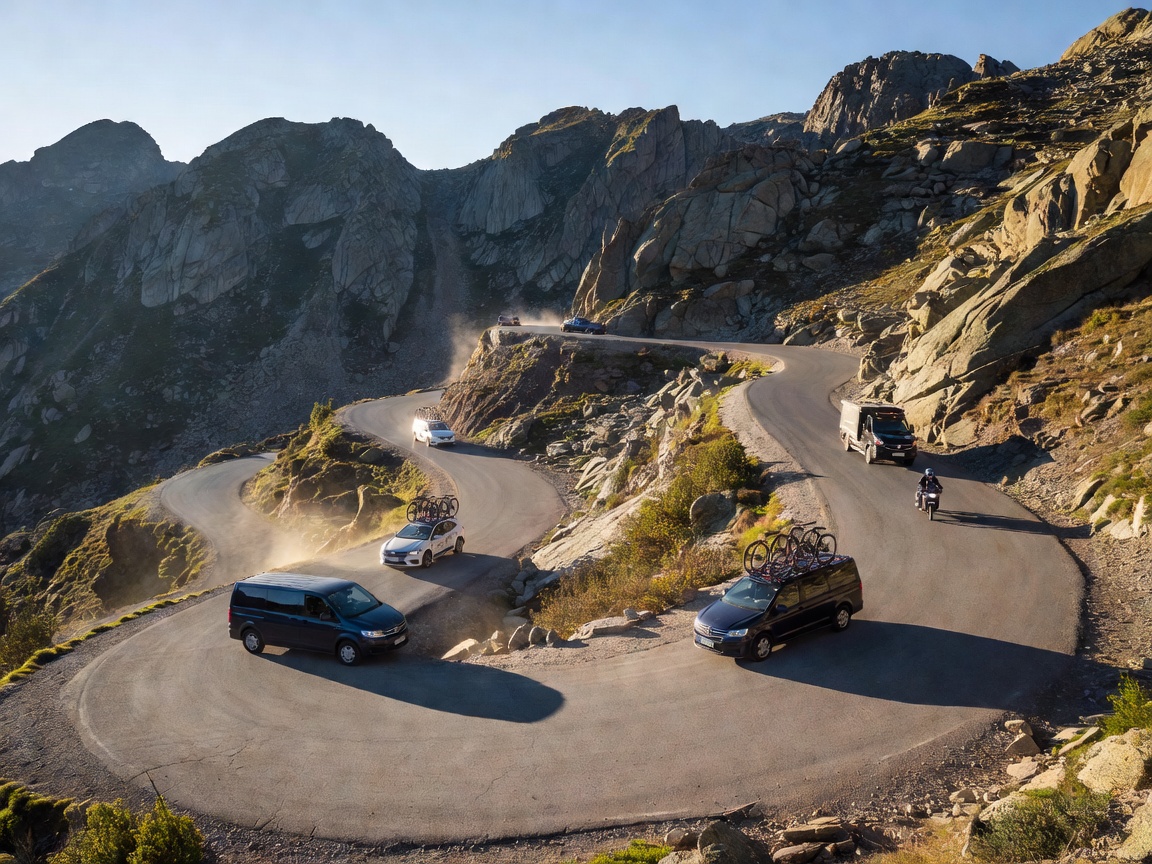
While Director Sportif (DS) support cars follow the peloton within the race convoy bubble under police escort, the team bus, kitchen truck, and soigneur feeder cars must navigate open civilian roads. These vehicles encounter closed road closures, restricted weight bridges, narrow Alpine hairpins, and finish-line security cordons.
We build customized GPS itineraries that keep support vehicles ahead of the police sweeps ("Caravane Publicitaire"), calculating realistic average speeds that account for steep gradients and heavy tourist traffic on mountain passes.
2. Soigneur Leapfrogging Strategy in Feed Zones
Getting fresh bottles, energy bars, and ice vests into rider hands during a sweltering 210-kilometer stage requires an intricate tactical timetable. An individual soigneur car cannot simply stop at Feed Zone 1 and then chase the peloton along the race route to Feed Zone 2. The roads are locked down tight.
The Two-Car Leapfrog Operational Matrix
- Staff Car A: Deploys to Feed Zone 1 (KM 65) via highway bypass 90 minutes before race start. Hands off feed bags, departs immediately via pre-scouted secondary routes to the finish line to prepare recovery shakes.
- Staff Car B: Skips Feed Zone 1 entirely, heading directly to Feed Zone 2 (KM 145) and the summit bonification point. Prepares tactical feed and radio checkpoints.
- Support Motorbike: Carries thermal cold bags and climbs ahead of breakaways to provide tactical feed bags in authorized roving feeding zones.
3. Bridge Clearance, Axle Limits & European Heavy Vehicle Permits
Modern team buses and workshop trailers weigh up to 26 tonnes and stand nearly four meters high. Crossing the Dolomites or small villages in the Basque Country means confronting ancient stone bridges, low railway underpasses, and strict seasonal axle weight bans.
Our travel planning team verifies heavy vehicle routes using laser elevation data and local departmental transport decrees. This prevents catastrophic bottlenecks where a team bus is forced to reverse down a 12% grade single-lane mountain road.
| Vehicle Class | Permit / Road Requirement | Critical Checkpoint |
|---|---|---|
| Team Coach / Bus | Class 4 Heavy Vehicle clearance, low-emission zone permits | Turning radius on mountain village hairpins |
| Mechanic Truck (18T) | Tachograph driver rest mandates, commercial transit tolls | Height limit below 3.9m on historic French tunnels |
| Director Cars (Estate) | UCI race vehicle accreditation, rooftop rack insurance | Rooftop bike clearance at hotel parking decks |
4. Live Caravan Tracking & Radio Sync
Cellular data drops in remote valleys. We equip our caravan coordinators with VHF high-gain vehicle radios and dual-satellite tracking pucks. If a lead car punctures or hits unexpected road construction on a detour, alternate coordinates are immediately broadcast to every vehicle in the convoy, keeping staff on schedule without missing critical rider checkpoints.