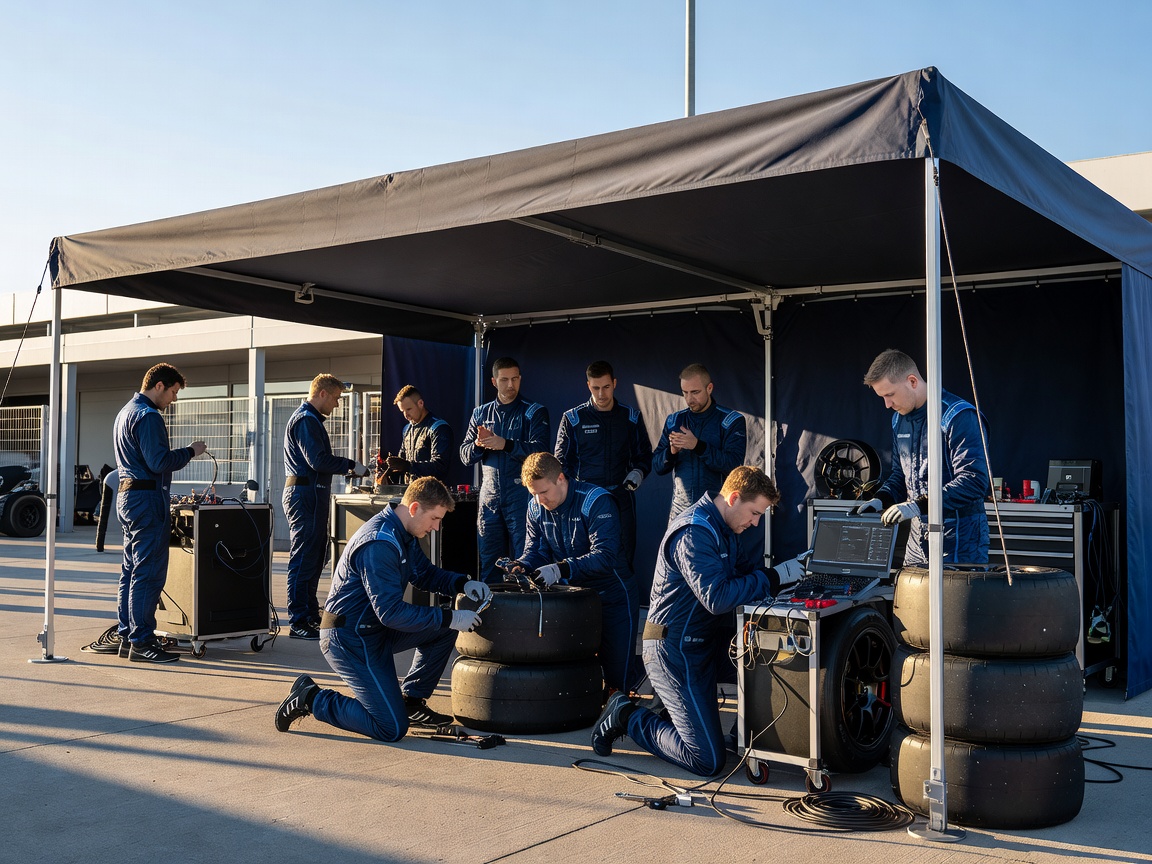
1. The T-Minus Paddock Timeline
Nothing is left to improvisation on race morning. Every staff member operates from a minute-by-minute timeline synchronized to official race time:
| Timeline Marker | Mechanic Crew Tasks | Soigneur & DS Staff Tasks |
|---|---|---|
| T - 180 Min | Paddock arrival; bus generator fired; wash station setup; awning deployed | Stock bus refrigerators, verify hotel breakfast departure numbers |
| T - 120 Min | Bikes unloaded to racks; final tire pressure calibration for track temp | Mix electrolyte bidons; pack musettes with gels and chews |
| T - 75 Min | Team cars 1 and 2 loaded with primary spare bikes (exact rider saddle heights) | Team bus arrives with riders; DS delivers strategic race tactics briefing |
| T - 30 Min | Rollers/smart trainers spun up for rider warmups (TT days) | Riders escorted to sign-on podium; timing transponders verified |
| T - 0 Min | Roll-off to neutral start; immediate paddock strike & cleanup starts | Team cars enter official race caravan convoy behind commissaires |
2. Car Rack Allocation: The Millimeter-Specific Spare Matrix
Car 1 sits in the racing caravan directly behind the commissaires, positioned to service breakaways or general classification contenders within seconds. The rooftop rack holds up to nine bikes:
Outer positions (1 and 9) are always allocated to team leaders because they can be unlatched and dropped to the tarmac five seconds faster than central bikes. Every spare frame is tagged with the rider's saddle height, reach, and cassette specs, guaranteeing an instant transfer without fiddling with hex keys during an emergency mechanical drop.
3. Rapid Paddock Strike and Relocation Protocol
Once the peloton departs for a 200km journey, the start village becomes useless. The race moves fast, and our crew moves faster. A dedicated teardown checklist ensures that awnings are retracted, spare stands loaded, generator cables coiled, and trash cleared within 40 minutes of neutral start.
The logistics truck hits the highway immediately to reach the designated finish zone or the subsequent stage hotel hours before the riders cross the line, guaranteeing that ice baths, recovery food, and clean laundry are prepped without delay.
Post-Finish "Sanctuary" Protocols
The moment riders cross the finish line, our paddock crew executes:
- Immediate hand-off of recovery carb shakes and thermal wind jackets in the mixed zone.
- Direct escort through the media scrums back to the air-conditioned team bus.
- Warm-down spin protocol on magnetic resistance trainers to flush lactic acid.
- Immediate mechanical retrieval of race-used bikes for preliminary damage inspection.
4. Anti-Doping Escort & Chaperone Coordination
Stage winners and random selections require immediate anti-doping station escorts. Our logistics staff includes a dedicated chaperone soigneur who stays with the rider from finish line to control room, ensuring chain of custody on all nutrition and water bottles consumed during testing.